Shark 20 Oz Skinny Tumbler Wrap Review
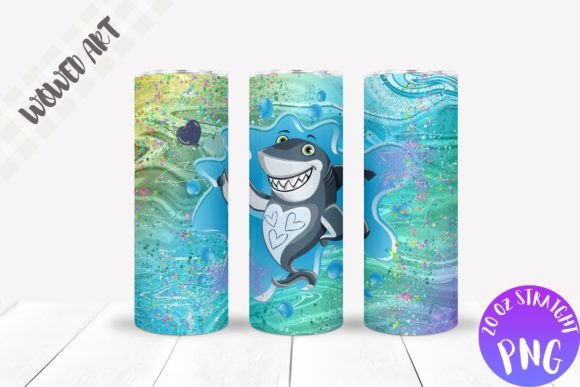
Right out of the .zip archive, the Shark 20 Oz Skinny Tumbler Wrap commands attention. The PNG file—sized at 9.3×8.2 inches and designed to resize for 30oz tumblers—gives me an immediate ocean vibe without being cutesy. It feels bold, a little edgy, and perfectly suited for coastal-inspired embroidery projects. The mood is less children’s cartoon and more modern boutique: a sleek shark silhouette, crisp negative space, and a layout that reads like a wrap-around statement piece. The visual personality is confident, making it a strong candidate for beach town shops, summer market merchandise, or anyone who wants a design that doesn’t whisper.
As an embroidery designer, I’m not just looking at a pretty picture. I’m already imagining how those lines will translate into thread, how the shape will hit a sweatshirt front, and whether the detail will survive a quick wash cycle. The Shark 20 Oz Skinny Tumbler Wrap, originally a graphic for sublimation, makes me think about the digitizing process: which areas will become satin stitches, where fill stitch will add texture, and how to handle the open spaces so the design breathes without losing impact. The straight shape of the file—designed to wrap a tumbler—actually lends itself beautifully to flat embroidery applications like tote bags, pillow covers, and tee shirt backs. The proportions are generous, and the fact that you can resize the file to fit a 30oz tumbler tells me the resolution is high enough to scale up without losing clarity, a huge plus when you need to adapt a design for a larger hoop.
First Impressions on the Light Table
When I pull up the PNG and overlay it on a mockup of a natural canvas tote, the design immediately feels like a summer staple. The shark motif isn’t cluttered; it’s stripped-down and graphic. That’s a relief, because overly complex illustrations often turn into a muddy mess of stitches once digitized. Here, the balance of solid fill areas and outline-like details promises clean stitch definition. I can already picture a running stitch for the contour lines, a dense satin stitch for the teeth and fin details, and a textured fill stitch for the body to give the shark a slightly dimensional, handcrafted look. The theme leans unisex, which broadens the customer base for anyone selling finished products.
One thing that stands out is the file’s straightforward packaging. The listing mentions a .zip archive with 20oz straight PNG files. For crafters and embroidery digitizers, this means no messy layers to untangle—just a clean, ready-to-trace graphic. The Graphics category here feels accurate; it’s a design asset that lives in the Crafts world, waiting to be transformed into something tangible. Whether you’re a handmade shop owner or an Etsy seller, this kind of simple, high-contrast artwork is a gift because it doesn’t require hours of manual cleanup before you can even begin the digitizing process.
Where This Design Really Belongs
I’m not going to pretend this design is for everything. It’s not. But for the right projects, it’s a home run. Let’s walk through a real scenario. I’m preparing a run of custom embroidered beach totes for a small boutique that sells seaside souvenirs. The Shark 20 Oz Skinny Tumbler Wrap becomes the hero graphic on the front pocket. Because the original file is a straight PNG, I can easily rotate it or crop just the shark head for a more compact patch-like placement. The 9.3×8.2 inch size at 20oz scaling means I can drop it onto a 4×4 hoop with minimal resizing, or stretch it for a 5×7 hoop on a sweatshirt back. That flexibility is practical.
Natural fits for this design include:
- Custom apparel: sweatshirts, hoodies, and long-sleeve tees where a large, centered embroidery makes a statement.
- Tote bags and beach bags: the most obvious and rewarding pairing, especially on natural canvas or navy cotton.
- Pillow covers: a single shark wrap design on a lumbar pillow brings a coastal accent to a sofa or porch swing.
- Aprons: for a fish market, a beachside restaurant, or a grill master who loves the sea.
- Patches: by isolating the head or fin, you can create a stand-alone embroidered patch for caps, jackets, or backpacks.
- Personalized gifts: add a name or date beneath the shark, and suddenly you have a memorable wedding gift for a beach-loving couple, or a birthday present that feels one-of-a-kind.
In terms of buyer engagement, the design has a natural “grab factor.” On a rack at a craft fair, an embroidered tote with this shark will catch the eye of coastal tourists, surfers, and collectors of nautical decor. It signals a handmade product with a professional edge, not a mass-produced iron-on. That perceived value matters when you’re pricing your work for a small shop product or an Etsy seller listing.
Stitching Reality: What Works and What Needs Caution
Now, let’s get into the nitty-gritty of how the Shark 20 Oz Skinny Tumbler Wrap will actually stitch out. The original graphic’s success in embroidery depends heavily on smart digitizing decisions. The shark’s edges, teeth, and any small negative space details will test your thread tension. I strongly recommend a medium-weight cutaway stabilizer on knits, and a tear-away on woven fabrics like canvas totes, to prevent puckering. The design’s width—around 9 inches—will likely require at least a 5×7 hoop, and if you plan to resize for a 30oz tumbler, the larger dimensions could push you into a 6×10 or multi-hooping project. Always check your hoop size before committing to a final placement.
Areas where you need to be extra careful:
- Small hoop sizes: if you’re limited to a 4×4 hoop, you’ll need to crop the design significantly. The shark’s impact relies on its scale, so a tiny version may lose the bold personality.
- Textured fabrics: terry cloth, fleece, or thick knits can blur the crisp outline. Use a topper to keep the satin stitches clean.
- Dark fabrics: the shark’s silhouette likely reads well on light backgrounds, but on black or navy, you may need to adjust thread colors. A light gray or silver body can create a striking contrast, but test it first.
- Stretchy fabrics: a direct garment embroidery on thin jersey will require a fusible mesh stabilizer to prevent shifting. The design’s solid fill areas can pull if the fabric isn’t properly stabilized.
- Intricate details: if the shark design includes tiny teeth, eye details, or subtle line work, those could close up if the stitch density is too high. Simplify where needed, and consider a running stitch for the finest lines to maintain clarity.
- Frequent washing: for items like kitchen towels or baby clothes, the embroidery must withstand repeated laundering. I’d use a dense fill stitch with a backing that won’t shrink, and pre-wash the fabric to avoid puckering later.
One of the biggest advantages of starting with a clean PNG like this is that you can test it in black and white before digitizing. Lay out the design on a plain background, strip the color, and see if the silhouette still reads as a shark. If it does, you’ve got a timeless graphic that won’t rely on trendy filters to make sense. That’s a key factor for brand consistency if you’re building a line of handmade products.
Practical Designer Notes for Real Projects
I’ve been burned enough times by assuming a design will stitch perfectly right out of the box. So, here’s what I’d do before listing a finished item or handing over a client project with the Shark 20 Oz Skinny Tumbler Wrap:
- Test on scrap fabric first: always. I’d stitch a reduced-size version on a cotton twill scrap to check how the details hold up. Pay attention to the shark’s teeth and any fin edges—those are often the first to blur.
- Check thread color contrast: the original PNG might be black and white, but embroidery thrives on subtle color play. A deep charcoal body with a lighter silver outline can add depth without complicating the design. Pick threads that pop against your chosen fabric.
- Review stitch density: if the design feels too heavy, it can make the fabric stiff. I’d aim for a balanced fill that allows the garment to drape, especially on apparel.
- Inspect small details: zoom in on the digital file. If there are any tiny cutouts or thin lines, decide whether they’ll survive as embroidery. Sometimes a slight simplification in the digitizing stage makes the final product look better, not worse.
- Test light and dark backgrounds: the shark might look incredible on a natural canvas tote but disappear on a dark navy sweatshirt. I’d mock it up both ways before committing to a production run.
- Use proper stabilizer: for the kind of crisp, graphic look this design demands, I’d lean toward a firm cutaway on knits and a medium-weight tear-away on wovens. A water-soluble topper on textured fabrics is non-negotiable.
- Confirm licensing before selling: the listing doesn’t spell out commercial use terms, so I’d reach out to the seller to clarify whether the finished embroidery can be sold on physical products. That’s a critical step before you invest time in digitizing and stitching.
From a craft business perspective, the Shark 20 Oz Skinny Tumbler Wrap offers strong potential as a signature design. It’s the kind of graphic that can anchor a collection—think a “Summer Seas” series with matching tote, pillow, and baby onesie. The fact that the file can be resized to fit 30oz tumblers means you can also use it for sublimation or print-then-cut projects, making it a versatile digital embroidery file asset even if you work across multiple mediums. For an embroidery designer who also sells printable mockups, this PNG serves double duty as a preview image for listings, adding a layer of professionalism to your shop.
In the end, the Shark 20 Oz Skinny Tumbler Wrap is not a delicate, dainty design. It’s built for impact. Whether you’re stitching it onto a canvas tote for a beachside boutique, a sweatshirt for a fisherman’s gift, or a patch for a kid’s summer camp cap, the design holds its own. The key is treating it with respect in the digitizing phase—preserving those bold lines, simplifying the noise, and letting the shark’s silhouette do the talking. For a custom embroidered product, that’s precisely what customers notice first.