Hibiscus Wrap Venti Cold Cup Design Review
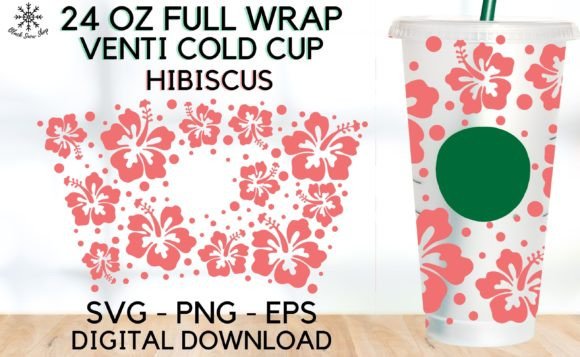
Some designs land in your lap and immediately spark a dozen project ideas. That was my first reaction when I opened the Hibiscus Wrap Venti Cold Cup file. The artwork has a breezy, tropical confidence that feels both trendy and timeless. It is not trying too hard. The hibiscus blooms wrap around the cup silhouette with a natural flow, and the composition reads clearly even at a glance. For anyone who sells handmade products, that instant readability is gold. Customers scrolling through Etsy listings or browsing a craft fair table do not study designs. They feel them. This one feels like a vacation morning, a patio brunch, or a gift someone would actually keep.
The file comes clean. No watermark. That alone tells me the creator understands how small business owners work. You can drop it straight into Cricut Design Space without wasting time on cleanup. The stated dimensions are about W 11.225″ x H 6.724″, which fits the reusable Venti cold cups you find at certain retailers. But here is the thing. As an embroidery designer, I look at a graphic like this and immediately start translating it into thread, tension, and fabric choices. The question is not just whether it works on a cup. It is whether this visual can live on a tote bag, a sweatshirt, a patch, or a nursery pillow and still hold its charm.
First Impression and the Mood It Creates
The tropical illustration category often swings between overly cartoonish and stiffly botanical. The Hibiscus Wrap Venti Cold Cup design lands in a comfortable middle. The petals have enough shape definition to feel intentional, but the overall layout stays relaxed. The wrapping motion around the cup gives the design a sense of movement. That is surprisingly hard to achieve in a flat graphic, and it matters even more when you translate it into machine embroidery design work. A static design stitched onto a garment can look lifeless. This one has a curved, organic energy that would sit beautifully on a curved surface, whether that is a cup, a cap, or the front panel of a toddler tee.
The mood is warm without being loud. I can imagine this on a linen apron for a boutique bakery, or on a set of reusable cups for a coastal wedding favor. The style leans illustrative, which means it would digitize well as a combination of satin stitch outlines and lighter fill stitch areas. You would not need heavy density to make the hibiscus petals read clearly. That is a practical advantage. Lighter stitching means less puckering, softer fabric hand, and a faster sew-out, all of which matter when you are producing multiple units for a craft business or preparing inventory for a market weekend.
Where This Design Naturally Belongs
Let me walk you through a real scenario. I recently had a client who runs a small handmade shop specializing in personalized gifts for bridal parties. She wanted something tropical but sophisticated for a set of custom tote bags. The Hibiscus Wrap Venti Cold Cup design immediately came to mind. The wrap-around composition lends itself to corner placement on a tote bag design, where the hibiscus cluster could anchor the bottom left or right of the bag front. Paired with a simple monogram or a short name in a clean typeface, the whole product suddenly looks curated and intentional rather than slapped together from clip art.
Beyond tote bags, I see this design thriving on sweatshirt embroidery for resort wear or vacation-themed small shop merchandise. Picture a lightweight crewneck in a sandy beige or soft coral with the hibiscus motif stitched on the chest. The scale would need adjustment, of course, since the original dimensions are tailored for a Venti cup wrap. But any competent digitizer can scale the artwork appropriately for different hoop size options. The key is that the design concept translates. The tropical wrap idea is not locked to one product. It is a visual theme that can stretch across an entire product line, from embroidered patch sets to pillow covers for a beach house.
For Etsy sellers and digital product sellers, the file's clean, watermark-free format means you can also use it for printable mockup previews. Showing a customer what the design looks like on a cup or a flat surface before stitching builds buyer confidence. That visual clarity helps close sales, especially for custom apparel orders where the customer cannot see the finished embroidery in person before purchasing.
Practical Embroidery Performance Considerations
When I evaluate any design for real embroidery use, I run through a mental checklist. The Hibiscus Wrap Venti Cold Cup holds up well on several fronts, but there are honest trade-offs worth discussing. The hibiscus petals have gentle curves and overlapping shapes. In a digital embroidery file, those curves translate into satin stitch paths that need clean angle changes. If the digitizing is rushed, you will see gaps or jagged edges where the petals meet. The design itself is not overly complex, which is a strength. Too many tiny details, and you end up with dense stitching that stiffens the fabric or causes thread breaks on high-speed machines.
The original file is a graphic meant for vinyl cutting, so there is no built-in stitch data. That means you or your digitizer will need to make decisions about stitch density, underlay, and thread colors. I would recommend testing the design on a scrap of the actual fabric you plan to use. A mid-weight cotton canvas handles differently than a stretchy jersey. If you are stitching onto a baby embroidery item like a soft onesie, you will want to keep the stitch count low and use a water-soluble topper to prevent the stitches from sinking into the plush fabric. The design's open, airy feel actually works in your favor here. You can keep the fill light and let the outline carry the visual weight.
For caps and curved surfaces, the wrap-around nature of the design is a natural fit. But be mindful of the seam at the center front of a structured cap. You will want to position the design off-center or adjust the layout so the hibiscus cluster does not get bisected by the seam. The hoop size for caps is also limited, so scaling down becomes necessary. The good news is that the hibiscus motif is recognizable even at a reduced size. A single bloom with a few leaves can stand alone as a smaller accent on a cap side panel or a kitchen towel corner.
Fabric and Color Choices That Maximize the Design
The Hibiscus Wrap Venti Cold Cup design reads best when there is enough contrast between the thread and the fabric. On a white or cream cup, the tropical colors pop. On a dark background, you need to think carefully about thread color selection. A deep navy tote with bright coral, magenta, and leaf green thread feels vibrant and intentional. But if you try to stitch the same design in pastel threads on a black sweatshirt, the petals will lose definition. I always advise testing the design in a black-and-white mockup first. Strip away the color and see if the composition still holds. This design passes that test. The hibiscus silhouette and the wrap motion are strong enough to read in monochrome, which means it will work on a wider range of fabric texture and color combinations.
Stretchy fabrics deserve extra care. A sweatshirt embroidery project on a fleece blend needs a solid cutaway stabilizer and possibly a light basting stitch around the design area to prevent shifting. The same goes for baby clothes and lightweight knit tees. The design does not have dense, heavy fill areas, which reduces the risk of tunneling or puckering. But you still need proper hooping and stabilization. I have learned this the hard way on rushed projects, and there is no shortcut worth taking when a finished product is going to a paying customer.
Customer Perception and Product Value
Here is what I have observed after years of selling handmade embroidered goods. Customers respond to designs that feel cohesive and finished. The Hibiscus Wrap Venti Cold Cup design does not look like a generic stock image. The wrap-around composition gives it a sense of place and purpose. When a buyer sees this on a personalized gift or a handmade product, they perceive it as a thoughtful choice rather than a random decoration. That perception directly affects what they are willing to pay. A simple floral decal on a cup might justify a modest price. A carefully chosen, well-executed hibiscus wrap design that fits the product perfectly signals higher quality and craftsmanship.
For small shop product lines, consistency matters. If you use this design across multiple items, from cups to aprons to pillow covers, you start building a recognizable brand aesthetic. Customers who bought a hibiscus cup at a spring market might come back for a matching tea towel set in the summer. The design's versatility supports that kind of product expansion. It is not so niche that it only works on one item, and not so generic that it blends into the background of every other tropical-themed product out there.
Designer Notes and Practical Advice Before You Stitch
Before you commit this design to a full production run, here is the practical checklist I would follow:
- Test on scrap fabric first. Do not assume the digitized version will sew out perfectly on the first try. Run a sample on the same fabric and stabilizer combination you plan to use for the final product.
- Check thread color contrast. Hold the stitched sample at arm's length under different lighting conditions. If the design disappears or blurs, adjust the thread palette.
- Review stitch density. The original illustrations and graphics style is clean. Keep the embroidery version light. Overly dense stitching does not make a design look more premium. It makes it stiff and uncomfortable to wear.
- Confirm hoop size. The stated dimensions are for vinyl application on a Venti cup. If you are scaling the design for embroidery, make sure the final size fits within your available hoop options without requiring awkward rehooping.
- Inspect small details at actual size. What looks crisp on a screen may blur or close up when reduced. Print a paper template at the intended stitch size and place it on the product before you digitize.
- Test on light and dark backgrounds. The same thread colors will look dramatically different on a white onesie versus a charcoal sweatshirt. Plan separate thread palettes for light and dark fabric bases.
- Use proper stabilizer. For structured items like cups, the vinyl application is straightforward. For fabric projects, match the stabilizer to the fabric weight and stretch level. Cutaway for knits, tear-away for wovens, and always a topper for fluffy or textured surfaces.
- Confirm licensing before selling. The file comes without a watermark and is ready for use with Cricut Design Space, but always verify the commercial terms. Can you sell finished physical products? Can you include the design on items sold through your Etsy shop or at craft fairs? Do not assume. Check.
Commercial Use and Small Business Potential
The Hibiscus Wrap Venti Cold Cup design fits neatly into several profitable product categories. Holiday embroidery gift sets, summer market merchandise, destination wedding favors, and boutique custom apparel all benefit from a tropical motif that reads as stylish rather than cheesy. The design also works for commercial embroidery applications where a business might want branded cups or apparel with a coastal or resort vibe. A beachside café, a spa, or a florist could use this design on staff aprons or customer giveaway cups without it feeling like a corporate logo.
For creative entrepreneurs who sell digital products, the clean, watermark-free file is ready to use in design assets bundles, mockup templates, or as part of a larger tropical illustration collection. The fact that it is sized specifically for the reusable Venti cold cups gives it a practical edge. Buyers know exactly what they are getting and what product it fits. That specificity reduces returns and customer confusion, which is a real business advantage.
Final Thoughts on the Design's Real-World Value
After spending time with the Hibiscus Wrap Venti Cold Cup design and considering it from an embroidery perspective, I would confidently recommend it for small-batch production, personalized gifts, and product line expansion. It is not a design that tries to do too much. The hibiscus motif is focused, the wrap composition is clever, and the overall mood is universally appealing without being bland. The practical considerations, scaling, digitizing, color matching, and stabilizer choice, are all manageable with proper testing.
What sets this design apart from many tropical-themed graphics is the intentionality of the layout. The wrap is not just decorative. It is structural. It guides the eye around the product and makes the design feel integrated with the object rather than applied on top of it. That quality translates beautifully into embroidery, where the texture of the stitches can enhance the sense of dimension and movement. Whether you are stitching it onto a custom embroidered tote, a baby item for a summer baby shower, or a patch for a denim jacket, the design delivers a finished look that feels polished and professional. For makers who care about presentation, customer satisfaction, and repeat business, that is exactly the kind of design asset worth keeping in your library.