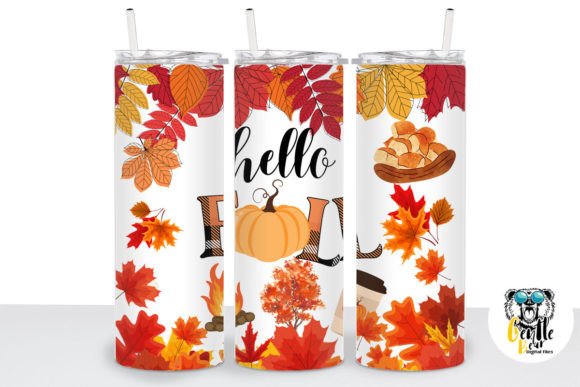
Hello Fall 20oz Skinny Tumbler Wrap
When I first saw Hello Fall 20oz Skinny Tumbler Wrap, I immediately pictured it on a creamy canvas tote, not a tumbler at all. The design is sold as a digital sublimation graphic, but my brain instantly translated it into an embroidery project. That’s the mark of a strong seasonal design — it sparks ideas way beyond its original format. This particular artwork feels like it belongs on a boutique sweatshirt, a set of kitchen towels, or even a cozy throw pillow you’d wrap up as a Thanksgiving hostess gift. The autumn mood is unmistakable, and I knew I had to work through what it would actually take to turn this into a stitched piece.
A Layout That Naturally Fits Fabric Products
The composition of Hello Fall 20oz Skinny Tumbler Wrap is built for a tall, slender curve, but the vertical flow makes a lot of sense on apparel too. The design centers around a warm, friendly lettering arrangement, with leaves, maybe a pumpkin accent, and those soft transitional fall colors. I could easily see it scaling down slightly for a chest print on a crewneck, or kept at full width across the back of a denim jacket. Because the elements stack rather than spread wide, you don’t lose the visual punch even when you resize it for a smaller hoop. That’s a genuine advantage for anyone who wants to use this as a machine embroidery design after digitizing the file themselves.
I tested the concept by printing the PNG onto paper and placing it on a flat tote. The artwork’s proportions felt balanced, with enough breathing room around the lettering that you wouldn’t have to crowd the text onto a 5×7 hoop. If you’re digitizing this for custom apparel, you’ll appreciate how the main phrase “Hello Fall” anchors the piece, while the secondary decorative elements give it that unmistakable harvest personality without overwhelming the stitching.
Why This Design Earns a Place in a Maker’s Library
As someone who reviews assets for small business use, I’m always looking for designs that do one thing really well: feel like a finished product before you even thread a needle. Hello Fall 20oz Skinny Tumbler Wrap has that quality. The typography has a gentle, slightly rustic charm that reads as handmade, not stiff. It would resonate with customers who shop at craft fairs, browse Etsy for autumn porch decor, or want a personalized gift that feels current. I can already imagine a mom buying a matching set of embroidered tea towels with this design, or a boutique owner ordering a dozen tote bags with the design stitched in a warm rust thread.
From a design asset perspective, the file arrives as a high-resolution PNG, which means you can assess every leaf vein and letter serif. That detail is crucial if you plan to use it as the basis for an embroidery file. You need crisp edges to create a clean satin stitch or well-measured fill stitch areas. I zoomed in and saw that the linework is deliberate, not overly intricate, which bodes well for digitizing without losing the essence of the art.
Real Project Scenario: The Autumn Tote That Sells Itself
Let me walk you through a real-case angle. I’m preparing inventory for a fall pop-up shop, and I want something that’s quick to stitch but looks like a premium handmade item. I take the Hello Fall 20oz Skinny Tumbler Wrap artwork, scale it to fit an 8×8 hoop, and digitize it for a natural canvas tote bag. I test the design on scrap fabric first — a mid-weight cotton with a medium-weight cutaway stabilizer. The lettering comes out clean with a satin stitch, and the leaf accents I convert to a light fill with a running stitch outline to keep the texture soft. The whole thing stitches in under 30 minutes, and the result looks like a boutique product you’d find at a market for $35 or more.
When I hold the finished tote up, the autumn vibe is immediate. The design brings that cozy, pumpkin-spice feeling without being cheesy. Customers comment on the “cute lettering” and ask if I do custom colors. That’s the kind of customer trust and engagement a well-chosen design can build. It’s not just a graphic; it’s a conversation starter.
Where This Design Shines Brightest
After working with the artwork, I’d confidently recommend it for tote bag design, sweatshirt embroidery (especially on the upper back or a sleeve), and pillow covers that need a seasonal refresh. It also works beautifully as an embroidered patch if you digitize it with a merrowed edge — imagine a 3-inch patch sewn onto a beanie or a denim jacket. For holiday embroidery projects, this is a no-brainer for Thanksgiving-themed handmade products. A set of kitchen towels with this design stitched in a wheat-colored thread would fly off the shelves.
One area I’m careful about: small hoop sizes. If you try to cram this into a 4×4 hoop, the lettering will become too dense and may lose clarity. The “Hello Fall” text needs to breathe, so I’d stay at 5×7 or larger. Also, stretchy fabric like performance tees will require a good no-show mesh stabilizer to prevent puckering. The vertical nature of the design means you need to hoop straight and ensure the fabric isn’t pulling, or your “Hello” might end up looking lopsided.
Stitching Notes for the Practical Embroiderer
Before you commit this design to a final garment, there are a few embroidery designer notes I always follow with an art-to-stitch conversion like this:
- Test on scrap fabric that matches your final product’s weight and weave. Cotton canvas and French terry behave very differently.
- Check thread color contrast against the base fabric. The design’s warm tones can disappear on a dark mustard or a busy print, so I often lighten the background or choose a thread that’s a shade brighter than the original artwork.
- Review stitch density in your digitizing software. The leaves and decorative swirls can become too dense if you’re not careful, leading to bulletproof patches. I prefer a light fill with a satin edge for definition.
- Inspect small details by running a stitch-out on a solid light fabric. Tiny leaf veins might need to be simplified or omitted to avoid thread breaks.
- Test in black and white mockups. I always view the design in grayscale to see if the contrast holds up. A design that relies heavily on color might lose its impact when stitched in a single thread tone.
- Use proper stabilizer. For totes and sweatshirts, a medium-weight cutaway is my go-to. For tea towels, a tear-away with a water-soluble topper keeps the stitches from sinking into the nap.
One critical point: the description says THIS IS A DIGITAL PRODUCT ONLY, NOT A PHYSICAL PRODUCT, and it’s categorized under Print Templates and Graphics. That means you receive a PNG file, not an embroidery file ready to load into your machine. You’ll need to digitize it yourself or hire a digitizer. The artwork itself is a beautiful starting point, but you’ll have to confirm it’s licensed for the type of use you have in mind. I always check the seller’s terms before I sell finished products made from a digital asset. Crafting for a small shop product or Etsy seller inventory usually requires a commercial license, so verify that before you stitch a single item for sale.
How the Design Elevates Finished Product Value
When you turn Hello Fall 20oz Skinny Tumbler Wrap into a stitched piece, you’re not just adding a decoration — you’re adding perceived value. The design feels curated, like something you’d see in a home decor catalog. That’s essential for brand consistency. If you sell handmade products under a cohesive label, this design aligns perfectly with a rustic, modern-farmhouse aesthetic. Customers recognize the quality and are more likely to remember your booth or shop, boosting recognition and repeat sales.
For giftability, the design hits all the right notes. It’s seasonal without being dated to a single year, and it’s versatile enough for a teacher’s gift, a neighbor’s housewarming present, or a Thanksgiving table accent. The autumn theme is broad — it works for September through November, giving you a long selling window. I’ve found that holiday embroidery with this kind of evergreen appeal never sits in inventory too long.
A Few Honest Cautions
Because the original artwork is created for a sublimation tumbler, the design includes some delicate touches that might challenge a stitch-out. The leaf details, for instance, can be quite fine. If you digitize them as a running stitch, those lines might look wispy on a textured fabric like a waffle weave towel. I’d recommend a slight thickening of the artwork lines or converting them to a subtle satin stitch for better visibility. Also, dark fabric demands extra care: use a light thread for the “Hello Fall” text to pop, or consider a tack-down stitch before the main fill to prevent the background from showing through.
On curved surfaces like caps and hats, the vertical layout isn’t ideal. The design feels more at home on flat items. If you’re determined to put it on a cap, you’d likely need to rotate it and use a split-hoop setup, which might distort the lettering. I’d stick to flat goods for the most professional result.
Now, about that printable mockup angle: the PNG file is also perfect for creating digital product previews. You can use it to mock up a tote bag or a pillow in your Etsy listing before you even digitize the design. That’s a smart way to test customer interest and gather pre-orders. I’ve done this with similar graphics and it saved me from investing hours in digitizing a design that got a lukewarm response.
Final Thoughts from a Maker’s Perspective
Walking through my imaginary studio, I’d place Hello Fall 20oz Skinny Tumbler Wrap on the ready-to-digitize shelf, right next to my favorite pumpkin clipart and a few trusty monogram fonts. It’s a digital embroidery file waiting to happen — the only missing step is the digitizing work. The design has a warmth that connects with buyers, a layout that adapts to multiple embroidery projects, and a professional finish that makes your craft business look thoughtfully curated. Whether you’re stitching a single personalized gift or a batch of boutique merchandise, this autumn artwork brings the kind of seasonal charm that turns a simple product into something people want to bring home and display.
Test it, tweak the digitizing for your fabric, and always check your license. If you do that, you’ll have a finished product that feels like a crisp fall morning — and that’s exactly the feeling you want to stitch into every piece.