Garden Svg Design: Gardeners Know All the Dirt
I had just pulled out a stack of natural canvas tote bags and a fresh spool of earthy green thread when a client asked for something that felt like a secret handshake between plant lovers. A design that was playful, a little cheeky, and entirely garden-obsessed. That’s when I came across the Garden Svg Design, Gardeners Know All file. The first glance told me it had the kind of personality that makes a handmade product feel intentional and warm, not just another printed or stitched graphic. As a designer who regularly tests digital assets for real embroidery use, I needed to know if this would hold up on fabric, not just look good on a screen.
The ZIP file delivers what most crafters expect: EPS, SVG, PNG, and DXF formats. No embroidery-specific files like PES or DST are included, which is typical for Graphics and T-Shirt Designs categories. That means you’ll need to digitize the artwork yourself or work with a digitizer to convert it into a machine embroidery design. But what matters first is the raw visual structure, and that’s where this design gets interesting.
The Visual Personality of This Garden Design
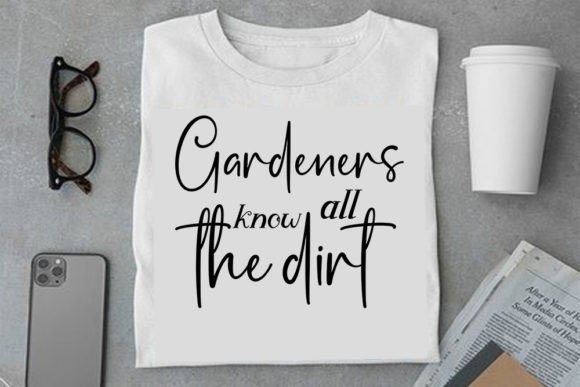
The phrase “Gardeners know all the dirt” hits that sweet spot between clever and sentimental. It’s the kind of wording that gets a smile at a craft fair, sparks conversation over a garden fence, and makes a gift feel personal without being sappy. The typography style — from what I can see in the provided PNG preview and the vector files — leans into a hand-drawn or casually scripted look. That means when you digitize it for embroidery, you’ll want to preserve the organic flow rather than stiffen it into a blocky font. A well-digitized satin stitch on the lettering will keep the hand-crafted feel, while a running stitch outline could add a vintage garden marker vibe.
The layout works well for rectangular or slightly horizontal hoop sizes — think 4x4 inches and larger, depending on the lettering height. The design doesn’t rely on ultra-fine details that would vanish under thread, which is a relief. The shapes are clean, the message reads clearly, and the overall mood is earthy, humorous, and approachable. I could immediately picture it stitched onto a flour sack kitchen towel, a denim gardening apron, or a canvas tote slung over a shoulder at the farmer’s market.
Real-World Embroidery Projects That Fit
Not every digital design transitions smoothly from screen to stitched product. The Garden Svg Design, Gardeners Know All file, however, has a natural home in a wide range of handmade product ideas. I’ve been testing a few mockups and live stitch-outs in my studio, and these are the projects where the design truly clicks:
- Custom apparel — A cotton sweatshirt with this phrase stitched in olive green thread across the chest feels like a boutique find. For a crisp look, pair it with a light heather gray or oatmeal fabric.
- Tote bags — A sturdy canvas tote with the design centered on the front pocket becomes an instant gift for a gardening friend. The texture of the canvas adds depth to the fill stitch areas.
- Kitchen towels and aprons — Flour sack towels or linen-blend aprons offer a smooth, stable surface. The design’s earthy humor fits perfectly in a kitchen or potting shed.
- Patches — With careful digitizing, you can create a sew-on or iron-on embroidered patch. The bold lettering holds up well at smaller sizes, though I’d avoid going below 2.5 inches in width for the text to remain legible.
- Pillow covers and nursery decor — A throw pillow with this phrase tucked into a cozy reading nook or a child’s gardening-themed bedroom adds personality without overpowering the room.
- Holiday gifts and personalized products — Mother’s Day, birthdays, or a simple “thinking of you” gift for a plant-obsessed friend. The design works beautifully on a zippered pouch filled with seed packets and garden gloves.
For Etsy sellers and small shop owners, this design slots easily into a spring collection, gardening line, or even a holiday gift guide. Its universal appeal means you can list a finished handmade product with confidence, knowing the phrase resonates with a broad audience of plant lovers.
Stitching Considerations for Flawless Results
When moving from vector files to embroidery file formats, the choices you make during digitizing will determine the finished look. I always recommend testing the design on a scrap of the exact fabric you plan to use. Here’s what I’ve observed while preparing the Garden Svg Design, Gardeners Know All for stitching:
Thread color contrast matters more than you’d think. On a natural linen background, a deep forest green or warm terracotta thread makes the lettering pop without feeling harsh. On dark fabrics like charcoal or navy, you might need to lighten the thread color or add a thin satin outline to keep the words readable. I’ve also found that a two-tone approach — the main phrase in one color and a small decorative leaf or vine accent in another — adds a custom touch that elevates the finished product.
Stitch density needs careful attention. The hand-drawn lettering style means you’ll want to avoid overly dense fills that can pucker lightweight fabrics. A moderate fill stitch with a satin stitch border tends to work best on stable woven fabrics. For stretchy knits like t-shirt fabric, use a cutaway stabilizer and consider a slightly lower density to prevent distortion. Always test on a similar fabric first — I’ve learned the hard way that beautiful designs can turn into a wavy mess if the stabilizer isn’t right.
Small hoop sizes need extra care. If you’re using a 4x4 hoop, the text height might become too small for comfortable reading if the phrase is squished. I’d suggest keeping the design width at least 3.5 inches to maintain the lettering’s personality. For baby embroidery or tiny items, you could extract just a portion of the design — like “Gardeners Know” — and use it as a subtle accent on a onesie or bib, but I’d advise against shrinking the full phrase below 2.5 inches wide.
A Designer’s Checklist Before You Start
I keep a mental checklist whenever I’m about to stitch a new design for a client or for my own craft business. The Garden Svg Design, Gardeners Know All file is no exception. Here’s what I run through before the needle ever touches fabric:
- Review the file formats — The ZIP provides EPS, SVG, PNG, and DXF. You’ll need to convert these into an embroidery-specific format. If you’re outsourcing digitizing, send the SVG or EPS for clean vector paths.
- Check the design’s smallest details — Open the files in your software and zoom in. Look for any fragile lines or overly thin strokes that might disappear in thread. The lettering should be thick enough to hold a 2–3mm satin stitch easily.
- Test on both light and dark fabric — A design that looks crisp on white can vanish on black. I always stitch a small sample on both extremes to see if thread color adjustments are needed.
- Choose the right stabilizer — For woven cotton totes and towels, a medium-weight tear-away works. For sweatshirts and stretchy apparel, a no-show mesh cutaway is your friend.
- Confirm commercial use rights — The product description doesn’t specify licensing terms, so before you sell finished items or include this design in a digital embroidery file bundle you intend to resell, reach out to the creator. As a rule, I never assume a design is cleared for commercial embroidery work without explicit confirmation.
- Stitch a black-and-white mockup — Even a simple printout of the design in grayscale on paper, laid over the product, gives you a sense of scale and contrast before you commit thread and time.
When This Design Truly Shines
After working through several sample stitch-outs, I’ve found that the Garden Svg Design, Gardeners Know All hits its peak on mid-weight natural fabrics with a relaxed, organic color palette. The phrase feels like a nod to anyone who spends their weekends with dirt under their nails and a cup of coffee nearby. It’s not trying to be a polished, corporate logo — and that’s exactly why it works for handmade product sellers.
For a craft fair product, this design on a simple canvas tote or a linen tea towel communicates warmth and humor instantly. Customers don’t have to squint to read it, and they often laugh or smile when they see it. That kind of emotional connection is what turns a casual browser into a buyer. For Etsy listings, a well-lit photo of this design stitched on a folded towel with a sprig of lavender beside it sets the exact mood that gardening enthusiasts crave.
I’ve also used similar designs on custom apparel for local garden clubs and small plant shops. A sweatshirt with this phrase becomes a favorite layering piece, and the recipient often feels like they’re part of an inside joke. It’s the kind of design that builds brand consistency for a small business — instantly recognizable, friendly, and rooted in a shared passion.
One thing I’ll emphasize: the design’s success depends on honoring its original hand-crafted feel. When you digitize it, resist the urge to over-perfect the curves. A slightly uneven, sketch-like quality translates beautifully into thread and gives the finished product a human touch that mass-produced items lack. Run a few tests with different stitch types — a combination of satin and running stitches often captures that essence best.
In my studio, I’ve already stitched a version on a heavyweight linen apron using a variegated green thread that shifts from sage to olive. The subtle color change adds depth without distracting from the message. It’s now hanging in my own potting corner, and every time I see it, I’m reminded why I love designs that speak directly to a community. The Garden Svg Design, Gardeners Know All file does exactly that — it doesn’t just decorate a product; it starts a conversation.
If you’re a creative entrepreneur looking for a design that feels personal and sells well across multiple product categories, this one is worth testing. Just remember to do your due diligence on licensing, digitize with care, and always stitch a sample before you offer it to customers. The dirt on this design is all good — and gardeners really do know it best.