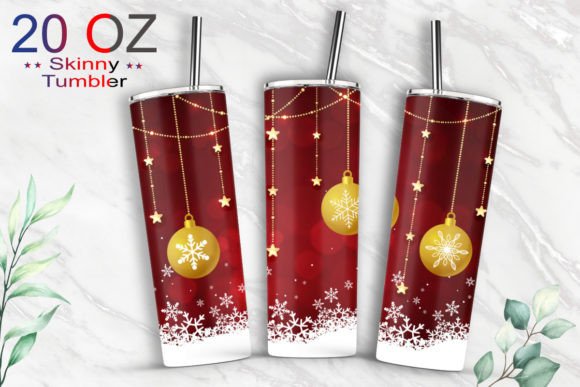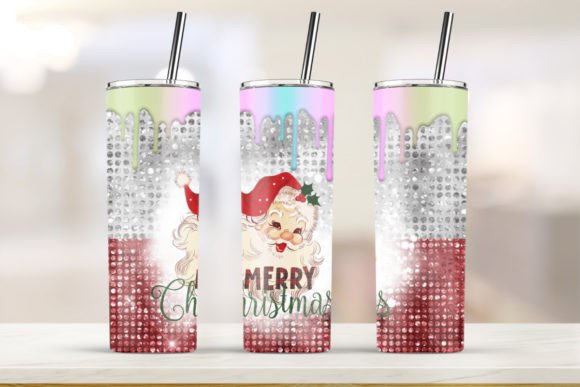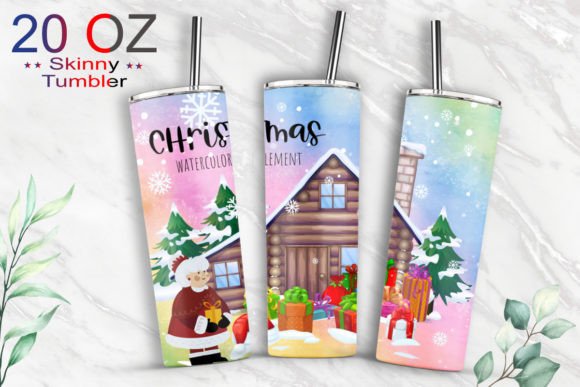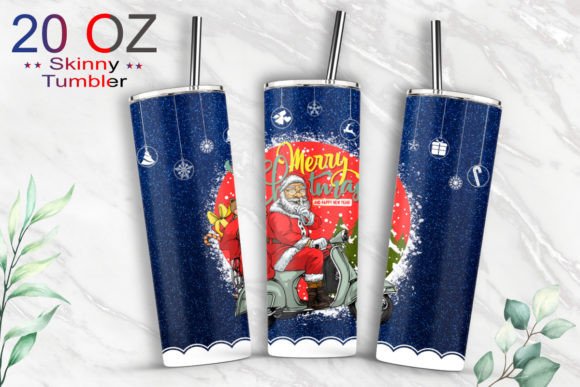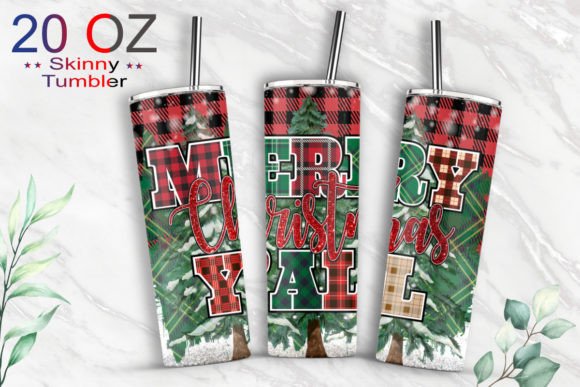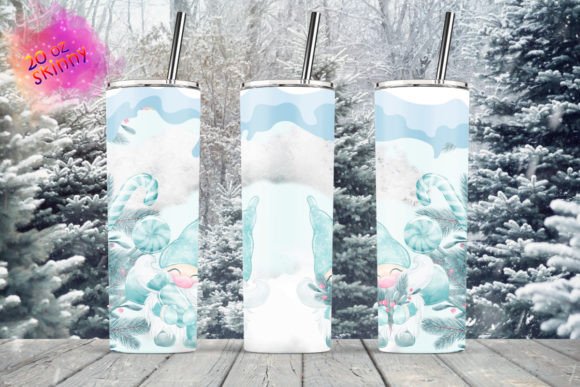
20oz Tumbler Christmas Sublimation
When I first opened the 20oz Tumbler Christmas Sublimation file, I immediately felt that familiar holiday warmth mixed with a clean, modern edge. This is not your grandmother's Christmas clip art. The mood sits somewhere between cozy nostalgia and boutique-ready polish, which is exactly what sells right now in handmade markets. As someone who has spent years testing designs across embroidery machines, fabric types, and product lines, I look at every new file with one question: will this actually look good on a finished product that someone hands over their hard-earned money for? With this one, the answer leans heavily toward yes, provided you understand where it shines and where it needs a careful hand.
What the Design Actually Feels Like
The composition carries a balanced holiday personality. It is festive without being loud, detailed without being cluttered. That matters more than most crafters realize. When you translate a visual concept into a machine embroidery design, every element either adds clarity or creates noise. Looking at the 20oz Tumbler Christmas Sublimation layout, I can already picture how the main motifs would separate into clean satin stitch outlines, how the decorative accents could work as light fill stitch areas, and where a running stitch might handle finer details without overwhelming the fabric.
The theme feels intentionally versatile. It leans Christmas, but not in a way that screams December-only. There is a wintry, celebratory undertone that stretches the seasonal window from November through January. That extended relevance is a quiet advantage for anyone running a craft business or selling on Etsy, because it gives your listing a longer viable shelf life.
Picturing This on Real Products
I mentally place every design on at least five different products before I commit to stitching it out. Here is where my mind went with this one.
A tote bag design feels like the most natural fit. The proportions of the artwork suit a vertical or slightly tapered canvas, which is exactly what a 20oz skinny tumbler template provides. That same vertical flow translates beautifully to a canvas tote, a kitchen towel hanging from an oven handle, or the front panel of a holiday apron. I can see a set of embroidered tea towels featuring elements pulled from this design, each one slightly different but tied together by the same visual language.
On a sweatshirt embroidery project, the design would need to be placed thoughtfully. The chest area works best for smaller, focused versions of the artwork. A full back placement could handle a larger interpretation, but I would simplify the finest details for that scale. Sweatshirt fleece has a texture that swallows delicate stitching, so I would increase the stitch density slightly and choose a medium-weight cutaway stabilizer to keep everything crisp.
For baby embroidery or nursery decor, I would extract the gentler elements. A soft reindeer motif, a snowflake cluster, or a subtle holiday wreath pulled from the overall design could land beautifully on a baby blanket corner or a tiny onesie. The key is scaling down selectively, not just shrinking the entire file and hoping for the best.
Where the Design Could Stumble
Every honest reviewer needs to tell you what to watch out for. With the 20oz Tumbler Christmas Sublimation, the potential pitfalls are not about the design quality itself. They are about how you apply it.
Small hoop sizes will be your first limitation. If you are working with a 4x4 inch hoop, you will need to isolate portions of the design rather than running the full composition. That is not a flaw; it is a reality of translating a sublimation layout built for a tall tumbler into an embroidery file format. I recommend identifying three or four standalone elements that can work independently, stitch those out as mini designs, and use them across multiple products.
Textured fabrics like terry cloth, chunky knit, or heavily napped fleece will obscure the finer details. The design has enough visual interest in its main shapes that it can survive some simplification, but do not expect every tiny accent to read clearly on a waffle-weave kitchen towel. Test on a smooth quilting cotton first, then move to your textured substrate once you know what the stitchout is supposed to look like.
Stretchy fabric is another area for caution. If you are planning a fitted t-shirt or a baby bodysuit, use a fusible mesh stabilizer and consider a light topper to prevent the stitches from sinking in. The design's decorative edges and potential lettering areas need a stable surface to hold their shape. Without proper support, curved lines can distort after the first wash cycle.
Dark fabric presents a different kind of challenge. Light and bright thread colors will pop beautifully, but mid-tone reds and greens can lose their impact against a black or navy background. I always run a quick test on a scrap of the intended fabric in both light and dark variants before committing to a full production run.
How a Holiday Market Prep Actually Plays Out
Let me walk you through a scenario I have lived more times than I can count. It is early October, and I am preparing inventory for a holiday craft fair. I have a stack of blank canvas totes, a bolt of linen-blend kitchen towels, and a few dozen unfinished aprons. I need a cohesive holiday collection that looks intentional, not like I grabbed random Christmas designs and slapped them on everything.
This is where the 20oz Tumbler Christmas Sublimation becomes a design anchor. I pull the main illustration, simplify it into a machine embroidery design suitable for a 5x7 hoop, and stitch it centered on the apron bib. For the kitchen towels, I extract the border elements and run them as a horizontal band along the hem. For the totes, I use the fuller composition but replace any text with a simple holiday greeting that matches the overall style. The result is a collection that feels curated. Customers notice cohesion. They buy multiple items. That is the difference between a scattered product table and a branded boutique experience.
Thread Colors and Stitch Decisions
Color selection makes or breaks a holiday embroidery project. With this design, you have room to play. Traditional red, forest green, and gold are safe and proven. But I have also tested palettes with burgundy, blush pink, and soft cream, and the result feels surprisingly elevated. That palette shift moves the design from rustic farmhouse into modern minimalist territory, which opens up a different customer demographic.
For satin stitch sections, I recommend a medium width on the main outlines and a slightly narrower setting on inner details. If the design includes any lettering, check the stitch direction carefully. Letters under a quarter-inch tall tend to close up with too much density. Sometimes a simple running stitch with a double pass looks cleaner than a heavy satin fill on tiny text.
The fill stitch areas should be checked for pull compensation. Sublimation artwork does not account for the physical push and pull of thread on fabric. If you are converting or adapting elements from this design into a digital embroidery file, you need to add that compensation yourself or confirm that the digitizer has already accounted for it.
Product Value and Customer Perception
What someone sees on a screen and what they hold in their hands are two different experiences. The 20oz Tumbler Christmas Sublimation has a polished, gift-ready look that translates well to a finished product. When a customer unwraps a kitchen towel with a beautifully stitched holiday motif, they do not just see the design. They feel the texture, notice the thread sheen, and register the overall quality. That perception builds trust. A repeat buyer is far more likely to return when their first purchase exceeded expectations.
For Etsy sellers and small shop product listings, the design also serves as a strong printable mockup asset. You can use it to create listing photos that show the tumbler artwork alongside coordinating embroidered items, giving your shop a cohesive visual identity. Buyers browsing for holiday gifts respond to that kind of thoughtful presentation.
Giftability is another factor that is easy to overlook. A design that feels specifically Christmas might limit the recipient to a few weeks of use. A design with a broader winter charm, which parts of this collection convey, lets the item stay in rotation well past New Year. That practical advantage is something customers appreciate, even if they do not articulate it directly.
Practical Designer Notes Before You Start
I keep a running checklist for every new design I evaluate. Here is what I would do before taking the 20oz Tumbler Christmas Sublimation into a paid project or a commercial embroidery run.
- Test the design on a scrap of the exact fabric you plan to use. Do not assume cotton, linen, and fleece will behave the same way.
- Check thread color contrast against at least two fabric backgrounds, one light and one dark. What looks great on natural linen might disappear on charcoal.
- Review the stitch density on small decorative accents. If the stitches pile up too thick, the fabric can pucker or the needle can struggle.
- Confirm your hoop size can accommodate the full design or the extracted element you plan to use. Do not force a large design into a small hoop.
- Test the design in a black-and-white mockup. If the composition still reads well without color, it will hold up beautifully in thread.
- Use a proper stabilizer for your fabric type. Cutaway for knits, tear-away for stable wovens, and a topper for anything with a nap.
- Check the licensing terms before you sell finished items or include the design in a digital embroidery file bundle. Since this is listed under Print Templates and Graphics, the usage rights may differ from a standard embroidery design purchase. Confirm what is allowed for physical product sales and what is restricted.
Who This Design Works Best For
After spending real time thinking through the applications, I would recommend the 20oz Tumbler Christmas Sublimation most strongly to craft business owners who sell in person at holiday markets, Etsy sellers building seasonal product lines, and apparel decorators who want a cohesive holiday collection that goes beyond basic clip art. It also suits hobbyists making personalized gifts for family and friends, because the design carries enough visual weight to feel substantial without requiring expert-level finishing skills.
For embroidery designers who create their own digitized files, this artwork provides a strong starting point for adaptation. The shapes are clean, the theme is clear, and the overall composition gives you room to experiment with stitch types, color palettes, and product applications. Just remember that the original file is a sublimation template for a 20oz skinny tumbler, so the proportions and detail level reflect that format. Adapt thoughtfully, test thoroughly, and the results will speak for themselves.